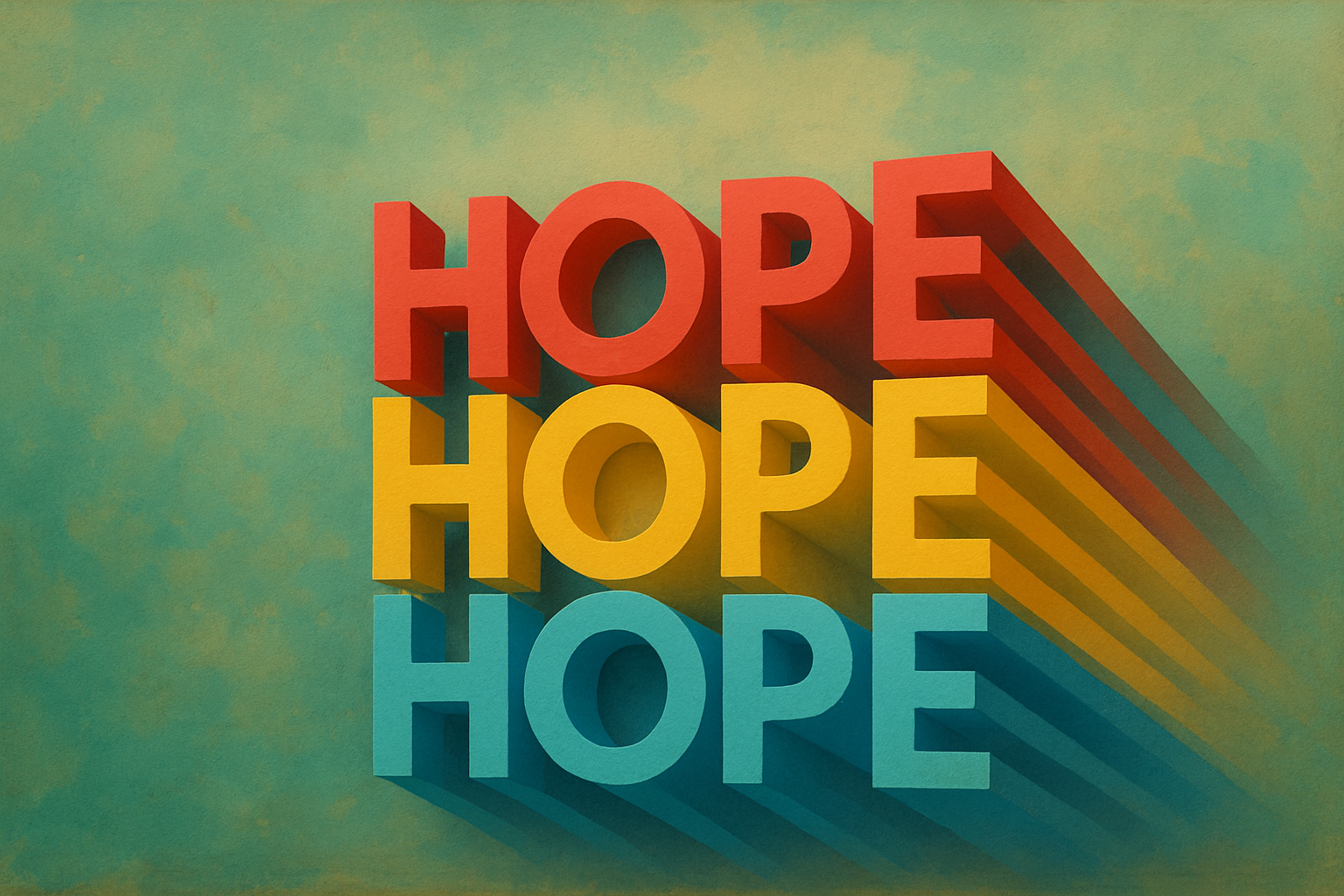
The last couple of weeks have been rough on the job search front. A few opportunities felt close — some even exciting — but none landed. And in the middle of that cycle of hope and letdown, I realized I needed to name something out loud: the emotional roller coaster of wanting.
Not doubting. Not failing. Wanting.
There’s a particular kind of fear that shows up the moment something starts to feel right. You recognize yourself in it — a role, a relationship, a possibility — and suddenly, you care more than you expected to. The hope comes fast, but so does the fear. Because now there’s something at stake. Something you want. And that wanting feels dangerous.
This isn’t about self-doubt. It’s about what happens when you let yourself hope. When the thing you’ve been quietly longing for finally shows up, and instead of just joy, you’re met with a kind of dread. The fear that it might not work out. The fear that you’ll get attached. The fear that you’re not ready to lose something you haven’t even had.
We don’t talk enough about that moment. But it shows up everywhere. Not just in job searches. It shows up in relationships, in housing, in health, in creativity. I’ve seen it in stories shared by people around me, like pregnancy after loss, where the joy of a new possibility is often shadowed by the memory of what didn’t last.
That tension — between hope and self-protection — is deeply human. And that’s what this piece is about.
This moment — when something feels like it finally fits — can take many forms. It might be a job posting that aligns perfectly with who you are. It might be the start of a relationship, the possibility of a new home, or the quiet urge to return to a long-abandoned dream. In every case, the pattern is similar: the closer something feels to what you’ve been hoping for, the more vulnerable you feel in wanting it.
Let’s start with one that many of us know all too well: the job that feels like it was written just for you. It’s the one that inspired me to write this piece.
When the Job Description Feels Like You
Finding a job that feels like a perfect fit is both a rush and a gut punch.
You go from numb scrolling to this is me in five seconds flat. And then, right after the excitement, comes the hesitation: Do I let myself want this? Because once you admit you care, it’s no longer just another application. Now it’s personal. And that’s scary.
The emotional math of job searching is wild. You train yourself to stay detached while trying to stay motivated. You skim listings with a half-shut heart. You manage expectations. And yet, every so often, something cuts through the fog — a mission you care about, a team that feels aligned, words that sound like they were pulled straight from your own story.
You feel the yes in your body before your brain even finishes reading.
Then comes the cascade. You start imagining what it would feel like to get the call. You picture your first day. You mentally rearrange your calendar. Maybe you even draft the reply email in your head, just in case.
And then, just as quickly, the dread creeps in.
Because the better the fit, the harder the fall.
Now it’s not just about getting a job — it’s about getting this one. And that shift, from possibility to desire, makes the risk feel sharper. You try to pull back. To temper your expectations. To “stay realistic.” But your mind is already down the path.
It’s not just fear of rejection. It’s fear of the cost of caring. And the harder you try to stay neutral, the more impossible it becomes — because deep down, a part of you already said yes.
When Hope Feels Risky
This emotional pattern isn’t limited to careers. We experience it in all kinds of moments where clarity meets uncertainty — where something finally feels right, and that rightness makes it feel even riskier to hope for.
Think of dating. You meet someone, and things just… click. You laugh easily, the rhythm feels natural, and you see a glimpse of what could be. But as soon as you feel that connection, there’s often a pullback. Not because it’s wrong, but because it suddenly matters. You tell yourself not to overthink it, but you do. Now there’s something to lose.
Or consider housing. You walk into an apartment or house that feels like home. You start mentally placing your furniture, your routines. You imagine your life unfolding there. But it’s not yours yet. And that moment, between seeing the fit and knowing the outcome, is filled with fragile hope and quiet fear.
Even with chronic illness. You find a new treatment or specialist who seems to understand what others didn’t. You feel a flicker of possibility. Maybe this time, things could shift. And almost instantly, the fear follows: What if it’s another dead end? You don’t want to get your hopes up, but they’re already rising. You feel torn between wanting to believe and needing to protect your heart.
I’ve heard people describe a similar kind of tension in pregnancy after miscarriage. The joy of possibility returns, but it’s complicated. Even in the earliest moments — a faint line, a new appointment — there can be hesitation. Hope is present, but quiet. Cautious. It’s another place where wanting something comes with weight and vulnerability.
Even in creative work, the moment a good idea lands, the stakes shift. It’s no longer just about doing something. It’s about doing it justice. And that weight can feel paralyzing.
In all of these, there’s a common thread. When something finally looks like what you’ve been searching for, it becomes harder to keep your emotional distance. And wanting it becomes the risk.
The Trouble With Expectations
Expectations are tricky. On one hand, they guide us. They reflect what we value and help us make decisions. On the other hand, they can distort our sense of possibility and trap us in cycles of overthinking.
When we see a path that feels aligned, whether it’s a job, a person, or a life shift, our expectations rush in to fill the gaps. We imagine how things should go. We start writing invisible contracts: “If I feel this excited, it must mean it’ll work out.” Or worse: “If this doesn’t work out, what does that say about me?”
But expectations don’t guarantee outcomes. They just raise the emotional stakes. And when they aren’t met, the fallout isn’t just disappointment. It’s disorientation. The hardest part isn’t that it didn’t happen. It’s that we let ourselves believe it might.
That doesn’t mean expectations are bad. It just means we need to hold them with care. They should point us forward without trapping us in emotional spirals when things don’t go as planned.
So what do we do with all this?
We learn to sit in the tension.
We practice holding space for both: the possibility that something could work out and the reality that it might not. We allow ourselves to want things without demanding certainty from them.
That might mean applying for the job even if your chest tightens while hitting “submit.” It might mean saying yes to someone even if you’re terrified they’ll leave. It might mean showing up for your dreams, knowing full well they might stretch out further than you hoped.
It might mean allowing yourself to believe this doctor might help. That this medication might work. That this time, things might change, even if you don’t know how long it will last.
There’s courage in trying. Not because you’re guaranteed a win, but because you chose to keep showing up anyway.
Hope doesn’t have to be naïve. It can be intentional. Rooted. A quiet kind of strength that says, “This matters to me. And I’m going to try, even if I don’t know how it ends.”
With love,
Aurelle



Laisser un commentaire